Get a free quote
Thanks for getting in touch
What Makes a Case Study Video Work (And Why Most Don’t)
You know your customer has a great story. They love what you did for them, the results speak for themselves, and they’re happy to go on camera. How hard can it be to film a quick case study video?
The truth is, anyone with a decent camera can record someone talking. But turning that into a case study video that actually persuades other customers?
That’s where things get complicated. Between managing nerves, asking the right questions, handling sound and lighting, and editing 40 minutes of footage into 90 compelling seconds, there are about a dozen places where good intentions turn into unusable content.
Here’s what separates case study videos that work from the ones gathering dust in someone’s downloads folder.
The difference between a testimonial and a case study.
Let’s start with what we’re actually trying to make.
A testimonial is someone saying nice things about you. A case study is a story with structure: here’s the problem we had, here’s what they did, here’s what changed. One is praise, the other is proof.
The best client testimonial videos follow a simple narrative. They show a real person in a real situation explaining how something actually got better. That means you need more than someone reading from a script or answering “yes, we’re very happy” on camera. You need to know what questions unlock the story. You need to recognise when someone’s given you the good bit and when to ask them to say it again, differently. You need to watch for the moment when they stop being nervous and start being human.
Most people filming their first case study realise this about 20 minutes into the interview.
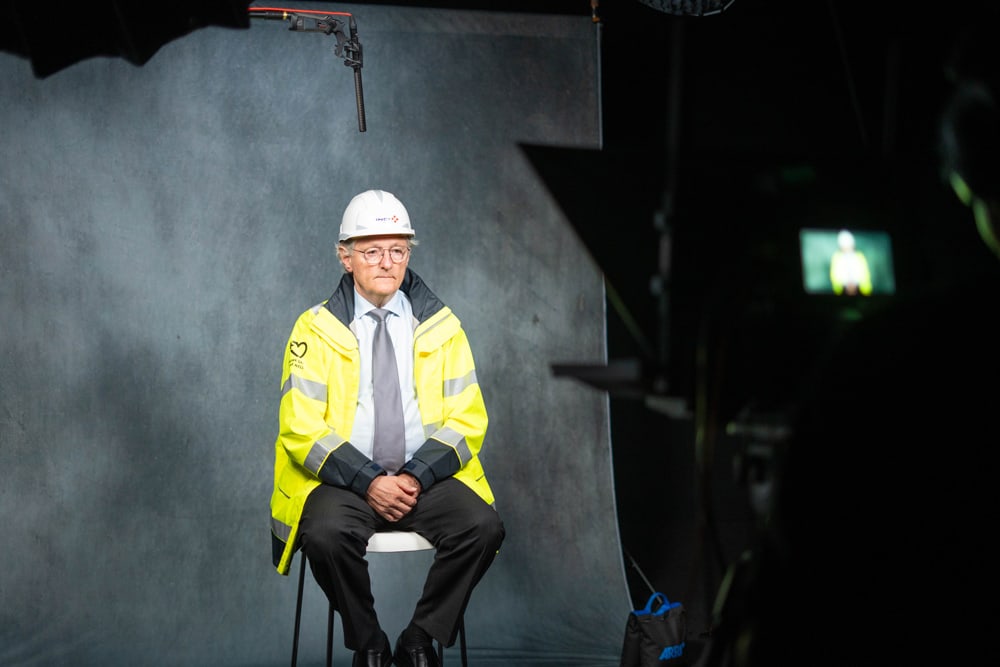
Case study video produced for Zurich Insurance. Find out more here.
What actually happens during a professional shoot
We arrive early, usually an hour before the interview starts. Not because we’re keen, but because good lighting and clean audio take time to set up properly.
The room you’ve been given always has a hum you didn’t notice until there’s a microphone in it. The window creates a backlight that makes your subject look like a witness protection interview. The lovely white walls bounce sound around like a squash court.
While we’re fixing these things, your interviewee is getting nervous. They’ve never done this before. They’re worried about looking silly. They’ve already apologised twice for not being good on camera. This is normal. This is also why the first ten minutes of any interview are usually unusable. People need time to forget the camera exists.
A good producer knows this. They’ll chat, they’ll explain what’s happening, they’ll make it feel like a conversation instead of an interrogation. By the time we actually start recording, it doesn’t feel like recording anymore. Then comes the interview itself.
The questions that matter (and the ones that don’t)
Here’s what doesn’t work: “Can you tell us about your experience with our company?”
Here’s what does: “What was happening in your business before we started working together?”
The difference is specificity. Vague questions get vague answers. Good case study production means knowing how to ask questions that get stories, not statements.
We usually work from a loose script, but the real skill is knowing when to abandon it. When someone mentions something interesting in passing, you follow that thread. When they give you the perfect soundbite, you recognise it and make sure you’ve got it cleanly recorded.
You’re also watching their body language, listening to their pacing, and gently steering them back when they wander into the weeds about procurement processes or contract minutiae.
It’s a lot to manage simultaneously. Especially when you’re also monitoring audio levels, checking focus, and making sure the recording light is actually on.
Why the technical stuff matters more than you think
You can have the perfect interview and still end up with unusable footage.
We’ve all seen videos where the sound cuts in and out, or there’s a constant buzz underneath everything, or the person’s face is half in shadow. These aren’t creative choices. They’re mistakes that come from not knowing what you’re listening and looking for.
Professional video case study production means understanding how microphones work in different spaces. It means knowing that the fluorescent lights overhead are flickering at a frequency your eye can’t see but your camera definitely can. It means having a backup recorder running because batteries die and memory cards fail.
It also means knowing what you can fix in post-production and what you can’t. You can colour grade footage that’s slightly too dark. You can’t rescue audio that was recorded badly. There’s no “enhance” button, whatever CSI told you.
Most people discover this when they get back to their desk and realise the interview they just spent three hours on has a noticeable hum all the way through it.
The edit is where stories actually get made
You’ve got 40 minutes of footage. Your final video needs to be about 90 seconds, maybe two minutes if you’re pushing it.
This is where most DIY case studies fall apart. Editing isn’t just cutting out the bad bits. It’s rebuilding the story in an order that makes sense to someone who wasn’t in the room. That means taking an answer from minute 32, pairing it with a question from minute 8, and making it feel like a natural conversation. You’re also removing all the ums and ahs without making it sound robotic. You’re cutting out the bits where they lost their train of thought or repeated themselves. You’re watching for moments where they blink at exactly the wrong time or where their expression doesn’t match what they’re saying.
Good editing is invisible. You should never notice the cuts. The story should just flow.
Then there’s everything else: colour grading so it looks polished, adding subtitles so it works with sound off, incorporating any b-roll footage or graphics, making sure the pacing keeps people watching.
Each of these steps requires software, skill, and a lot of time staring at timelines.
The bit nobody thinks about until it’s too late
Let’s talk about approvals and legal sign-offs.
Your client has just spent an hour talking on camera. They were relaxed, they said some great stuff, and you’ve edited it into something you’re proud of. You send it to them for approval.
They hate how they look. They want to re-record everything. Or their legal team won’t sign off on a claim they made. Or they’ve just been acquired and can’t be in marketing materials anymore.
Professional video case study production includes getting proper releases signed before you film, managing expectations about timelines, and having conversations about what can and can’t be said on camera. These aren’t glamorous parts of the process, but they’re the difference between a finished video and an expensive waste of everyone’s time.
We’ve seen companies spend thousands producing case studies they legally can’t use because nobody checked the paperwork first.
When DIY makes sense (and when it doesn’t)
Look, you can absolutely film your own customer testimonials. If you’ve got someone comfortable on camera, a quiet room, a decent microphone, and time to learn as you go, you’ll probably end up with something usable.
The question is whether that’s the best use of your time.
Most marketing teams who try this once hand it over to professionals the second time. Not because they couldn’t do it, but because they realised how long it takes to do it properly. The planning, the shoot day, the editing, the revisions. It adds up quickly.
There’s also the matter of consistency. If you’re producing multiple case studies, they need to look and feel like they belong to the same family. Same quality, same structure, same production values. That’s hard to maintain when you’re learning on the job.
What this means for you
Case study videos work when they tell a clear story, look professional, and feel human. Getting all three right means managing a lot of moving parts simultaneously.
The skills involved aren’t mysterious. They’re just specific, and they take time to develop. Time most people would rather spend on their actual job.
If you’re thinking about producing case studies in-house:
- Plan for at least three times longer than you think it will take
- Invest in a decent microphone before you worry about the camera
- Write your questions in advance but be ready to abandon them
- Get legal sign-offs sorted before you press record
- Budget time for multiple rounds of edits and approvals
If you’d rather hand this to people who do it every week, that’s what we’re here for. Everything starts with a conversation about what you need and what success looks like.
Either way, make sure the story you’re telling is worth the effort of telling it properly.
Get in touch if you want to talk about your next case study project, or if you just want to know whether the idea you’re working on will actually work on camera. Call us on 01962 870 408 or hit the button below.
Let’s talk about your video project
Every successful video starts with a conversation.
Tell us what you’re trying to achieve, and we’ll help you shape the right approach.