Get a free quote
Thanks for getting in touch
The Case for Video Podcasts in Corporate Learning
Traditional training videos have their place. Step-by-step processes, compliance content, technical demonstrations. But there’s a whole category of workplace learning that doesn’t fit neatly into a structured course format.
Sometimes the most valuable knowledge transfer happens through conversation. When a senior engineer talks through how they approach complex problem-solving, or a sales director shares what they’ve learned from difficult client situations, or a team discusses how they’ve adapted to industry changes.
This is where video podcasts come in.
Video podcasts offer something different from traditional training content. They feel less like instruction and more like listening in on conversations you’d want to be part of. This article explains when video podcasts work for corporate learning, how to create content that people actually want to watch, and why the format is particularly effective for building expertise and thought leadership within organisations.
What Makes Video Podcasts Different from Training Videos
A training video has a clear learning objective. Watch this, learn that, apply it here. A video podcast takes a looser approach. It explores ideas, shares perspectives, and lets expertise emerge through natural discussion rather than formal instruction.
The format suits certain types of knowledge better than others. Implicit knowledge, the kind that experienced people carry but struggle to articulate in a training document, often surfaces naturally in conversation. When someone explains their thinking process rather than just the outcome, that’s when real learning happens.
Video podcasts also work on a different timeline. Training videos are typically watched once, maybe twice. Podcasts build an ongoing relationship with the audience. People subscribe, they watch new episodes, they develop familiarity with the hosts and guests. That sustained engagement creates a learning culture rather than just a learning event.
The visual element matters more than you might think. Yes, people could listen to audio-only podcasts, but seeing facial expressions, watching demonstrations, and observing the dynamic between host and guest adds context that pure audio misses. It’s the difference between hearing about something and seeing someone show you whilst they talk.
When Video Podcasts Work Better Than Traditional Training
If you’re teaching someone to use a piece of software, you need a training video. If you’re helping people understand industry trends, strategic thinking, or the reasoning behind decisions, a video podcast probably works better.
Video podcasts excel at several specific types of corporate learning. Expert interviews let you capture knowledge from senior team members or industry specialists in a format that feels natural rather than performative. Instead of asking someone to present formally, you’re having a conversation that reveals their expertise organically.
Discussion-based learning works well in this format too. When you bring together people from different departments or with different perspectives on the same challenge, the conversation itself becomes the learning material. Marketing and product teams discussing customer feedback, or operations and finance talking through process improvements. These cross-functional discussions help people understand the bigger picture.
Thought leadership content suits the podcast format because it’s inherently exploratory. You’re not stating facts, you’re examining ideas. A 30-minute conversation about where your industry is heading, or how technology is changing your field, gives people frameworks for thinking rather than instructions for doing.
The episodic nature also means you can tackle bigger topics over time. Instead of trying to compress everything about leadership into one training session, you can explore different aspects across multiple episodes. Each conversation stands alone but builds into a broader understanding.
Planning Content That People Want to Watch
The mistake most organisations make with video podcasts is treating them like meetings that happen to be filmed. Just because something is conversational doesn’t mean it doesn’t need structure.
Start with clear themes for each episode. What’s the one thing you want people to think about differently after watching? That focus prevents the conversation from wandering into irrelevance whilst still allowing for natural discussion.Choose guests who can actually have a conversation, not just deliver prepared statements. The best podcast guests are people who think out loud, who can respond to questions they haven’t rehearsed, and who aren’t afraid to say “I don’t know” or “I’ve changed my mind about that.” Authenticity matters more than polish.
Prepare questions that create conversation rather than presentations. “Talk us through your approach to…” works better than “What is your approach to…” The first invites storytelling, the second often gets you a list.
Keep episodes to a sensible length. Attention spans vary by topic, but 20 to 30 minutes tends to work for most corporate learning content. Long enough to explore ideas properly, short enough that people will actually watch during a lunch break or commute.
Production Approaches That Match Your Resources
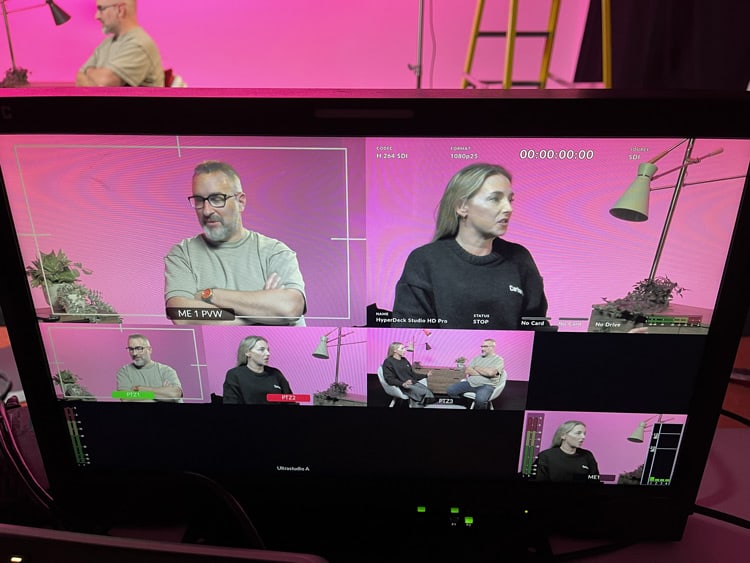
Video podcasts don’t require elaborate setups, but they do need consistency. If episode one looks and sounds completely different from episode five, it undermines the sense of a series.
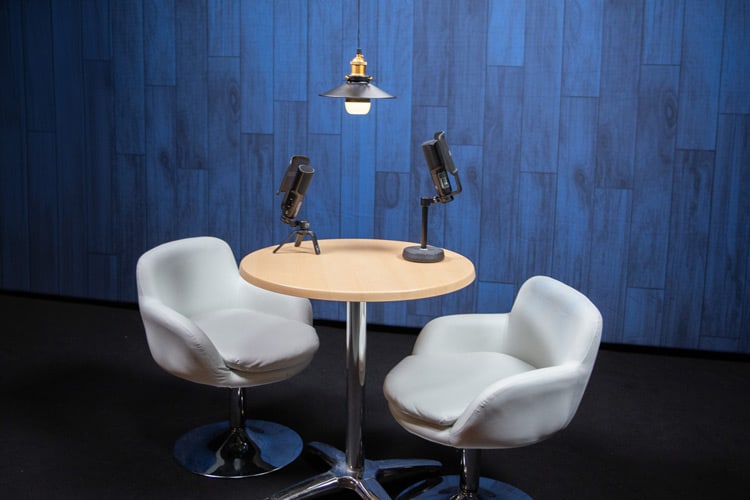
A simple studio setup works well. Two or three chairs, decent lighting, clean audio, maybe a branded backdrop or bookshelf. The key is repeatability. Once you’ve established a setup that works, you can bring different guests in without reinventing the production each time.
Audio quality matters even more than visual quality for this format. People might forgive slightly flat lighting, but they won’t tolerate unclear audio or distracting echo. Invest in proper microphones. Record in a space that doesn’t bounce sound around. These basics make the difference between content people can focus on and content they click away from.
Consider filming multiple episodes in one session with different guests. It’s more efficient and helps establish momentum. Three hours in the studio could give you four episodes. That’s a month of content from one filming day.
Remote interviews are perfectly viable if your guests are geographically spread. The quality won’t be quite as polished as in-studio filming, but the content matters more than the setting. Just make sure everyone has decent lighting and a quiet space.
Making Content Accessible and Discoverable
Video podcasts need to work for different audiences in different contexts. Someone might watch at their desk with sound, someone else might watch on their phone during their commute with captions on.
Always add captions. They’re not just for accessibility, though that’s reason enough. Many people watch video content with sound off, particularly in open plan offices or public spaces. Captions mean your content works in those situations.
Create short clips from longer episodes. A 25-minute conversation probably contains three or four moments worth highlighting separately. Pull those out as 60 to 90-second clips for social media or internal communications. They work as teasers for the full episode and as standalone pieces of insight.
Make episodes easy to find and navigate. If you’re creating a series, maintain a consistent structure. Use descriptive titles that tell people what the episode covers, not clever titles that require insider knowledge to understand. “Adapting Your Sales Approach to Remote Clients” works better than “Episode 7: The New Normal.”
Transcripts add value beyond accessibility. They make content searchable and let people quickly scan whether an episode is relevant to them before committing 20 minutes to watching it.
Building a Series People Actually Follow
One video podcast episode is just content. A series becomes a resource people return to.
Consistency in scheduling helps. Monthly episodes are manageable for most organisations and frequent enough to maintain momentum. Weekly might be ambitious unless you have dedicated resources. Quarterly probably isn’t frequent enough to build an audience.
Develop a recognisable format. That doesn’t mean every episode needs to be identical, but some consistent elements help. Maybe you always start with the guest explaining their role and background, or you always end with asking what they’re reading or learning at the moment. These patterns make the series feel cohesive.
Respond to what your audience engages with. If an episode about change management gets significantly more views than others, that tells you something about what your organisation needs right now. You can explore that topic further in future episodes.
Feature internal experts alongside external guests. Your own team members often have valuable insights, and featuring them builds internal credibility whilst developing their thought leadership. It also signals that expertise exists within the organisation, not just outside it.
Measuring Whether It’s Working
Unlike traditional training where you can test knowledge retention, video podcasts require different success metrics.
Watch time matters more than view count. If people are watching most of each episode, you’re creating content they value. If they’re clicking away after two minutes, something isn’t working.
Look at who’s watching. Are you reaching the intended audience? If you’re creating content for middle managers but only senior leadership is engaging, you might need to adjust your topics or how you’re promoting episodes.
Track conversation starters. The real value of video podcasts often shows up in how they influence thinking and discussion. If people are referencing episodes in meetings, sharing them with colleagues, or using them as starting points for team conversations, that’s success.
Monitor which episodes perform best. The patterns will tell you what topics resonate and which guests connect with your audience. Use that insight to shape future content.
What This Means for You
Video podcasts won’t replace structured training content, and they shouldn’t. But they fill a gap that formal training often misses: the space where expertise, experience and perspective get shared through conversation rather than instruction.
When you create video podcast content, you’re building a library of institutional knowledge that would otherwise stay in people’s heads. You’re making expert thinking accessible to everyone in the organisation. And you’re creating a format that people actually choose to engage with rather than sitting through because they have to.
The format works because it respects how people learn. Not everything needs a quiz at the end or a certificate of completion. Sometimes learning is about exposure to different ways of thinking, hearing how experienced people approach problems, and gradually building a more sophisticated understanding of your field.
Here’s what to remember:
- Video podcasts suit exploratory topics and implicit knowledge better than procedural training
- Conversation-based formats make expertise accessible without feeling like formal instruction
- Consistent production quality and scheduling help build an audience that returns
- Captions and transcripts make content work across different viewing contexts
- Success shows up in engagement and how the content influences thinking, not just completion rates
Ready to Explore Video Podcasts for Your Organisation?
Everything starts with a conversation about what you’re trying to achieve. If you’re thinking about creating video podcast content that builds expertise and thought leadership within your organisation, we’d be happy to talk through what’s possible.
Get in touch for a free quote, or just give us a call on 01962 870 408 for an informal chat about your project.
Let’s talk about your video project
Every successful video starts with a conversation.
Tell us what you’re trying to achieve, and we’ll help you shape the right approach.