Get a free quote
Thanks for getting in touch
What Makes a Great Event Video? Here Is What You Need to Know
You have spent months organising your conference, product launch or corporate awards evening. The venue is booked, the speakers are confirmed and the agenda has been polished within an inch of its life. Then the day arrives, people enjoy it, and it is over. Without a video, most of what happened simply disappears. The energy in the room, the moments that landed, the words that meant something. Gone.
A great event video changes that. It captures the experience in a way that works long after the day itself, giving you content that can be shared internally, posted publicly or used to build the case for doing it all again next year. But not all event videos are created equal. Here is what separates the ones that genuinely work from the ones that end up unwatched in a shared drive.
It Starts Well Before the Day Itself
The biggest mistake people make with event video is treating it as an afterthought. You book the camera operator for the day, hand them a rough schedule and hope for the best. The result is often technically fine but editorially flat because nobody agreed upfront on what the video is actually for.
Before a single frame is filmed, it is worth asking some simple questions. Who is the audience for this video? Where will it live? What do you want people to feel when they watch it? Is this a highlights reel for social media, a full session recording for delegates who could not attend, or a longer piece for your website? The answers shape everything, from how many camera operators you need to where they stand and what B roll gets captured on the day.
A short briefing call before the event costs nothing and makes an enormous difference to what you end up with.
The video that works is the one that was planned with an outcome in mind, not just a camera pointed at a stage.
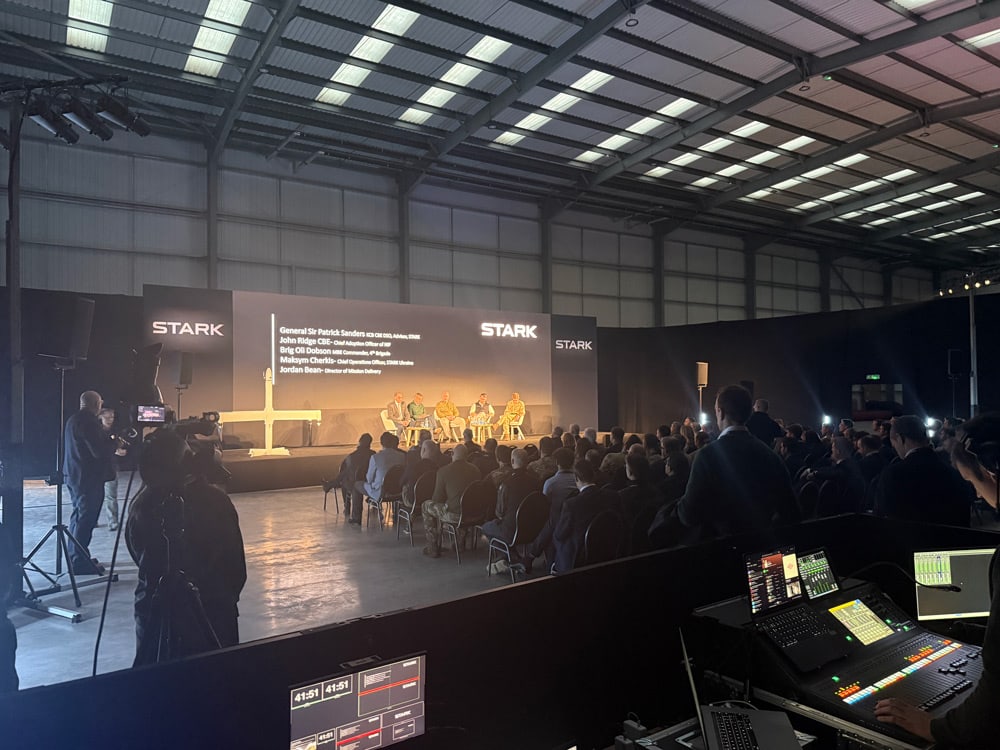
Coverage and Camera Placement on the Day
Events move fast. There are often multiple things happening at once, and the moments that matter most tend to be the ones nobody warned you about. A great event videographer is not just following a shot list. They are reading the room, anticipating what is coming and making judgment calls in real time.
For most corporate events, a two-camera setup gives you far more flexibility in the edit. One camera holds a wide shot to establish the space and give context. The second moves around to pick up closer angles, reactions in the audience, detail shots and the quieter moments between the scheduled content. If budget allows a third operator to capture roving footage throughout the day, the edit becomes significantly richer.
B-roll (cutaways) matter more than people realise. The shot of someone in the audience nodding, or two colleagues laughing over coffee during a break, or a close up of a speaker making a point with their hands. These are the moments that give an event video its texture and make it feel like something worth watching, rather than just a record of what was said.
Sound Is the Thing Most People Underestimate
If there is one area where event videos go wrong most often, it is audio. Poor sound is not just distracting. It actively stops people watching. Research consistently shows that viewers will tolerate average picture quality, but they will abandon a video very quickly if they cannot hear it clearly.
At a corporate event, there are usually several audio sources to manage. The main PA feed from the venue, lapel microphones on speakers, a handheld or podium mic for Q and A sessions, and ambient sound from the room itself. A good audio setup captures these separately where possible so they can be balanced properly in the edit. Relying solely on a camera mounted microphone picking up whatever the PA is producing is rarely enough.
If your event involves a panel discussion or breakout sessions, it is worth discussing the audio plan in advance. Sometimes a simple additional recorder on the table makes all the difference to what you end up with.
Viewers forgive imperfect pictures far more readily than they forgive sound they cannot follow.
Editing Is Where the Story Comes Together
Filming the day is only half of it. The edit is where a collection of footage becomes something people actually want to watch. A skilled editor is not just cutting between shots. They are shaping a narrative, choosing the moments that carry emotional weight, and finding a pace that keeps the viewer engaged from start to finish.
For a highlights reel, that typically means distilling a full day into three to five minutes. The opening needs to pull people in quickly. The middle needs enough variety to hold attention. And the ending needs to leave the viewer with a clear sense of what the event was about and why it mattered. Music plays a significant role here. The right track lifts the energy of the whole piece and gives the edit a rhythm that feels purposeful rather than cobbled together.
Subtitles and captions are increasingly important too. A large proportion of video content is now watched without sound, particularly on social platforms. If your event video includes key messages you want people to take in, accessible captions ensure those messages land regardless of how the viewer is watching.
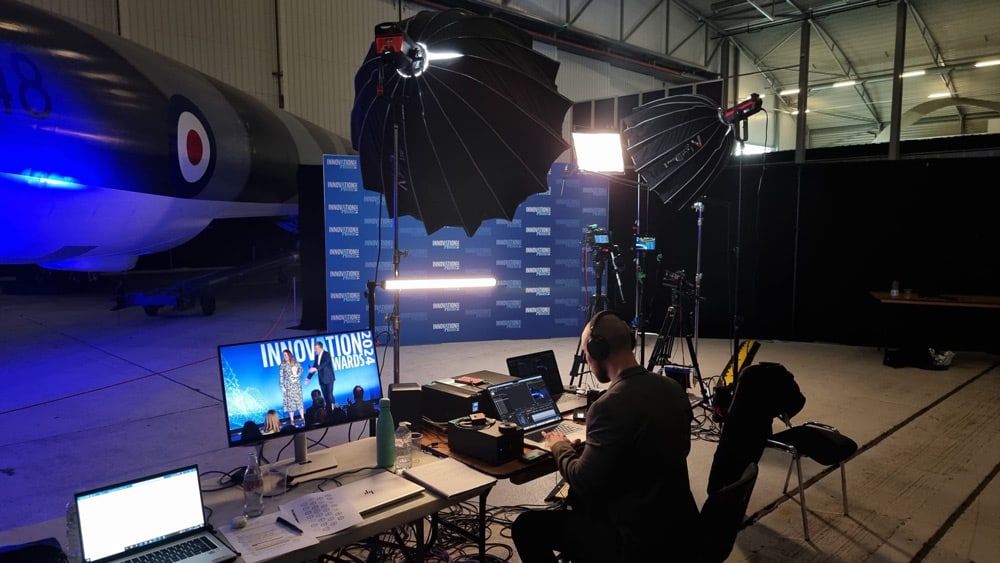
What Happens After Is Just as Important
A great event video has a longer life than the event itself. With some thought about how it will be used, the footage you capture on the day can serve several different purposes. A two-minute highlights film for LinkedIn. A series of shorter clips from individual speakers for email campaigns or social posts. A full session recording made available to delegates who could not attend. Even a short piece of content for the event page to promote the next one.
This is worth thinking about before the day rather than after. If you know you want individual speaker clips, that shapes how the filming is done and what additional coverage is captured. If you want a version suitable for a conference registration page, the framing of the edit is different to one designed for internal communications.
The events teams and marketing teams we work with most often are the ones who think of video as part of the wider communications plan rather than a box to tick on the day. When that thinking is in place from the start, the video they end up with tends to do a great deal more work for them.
Key Takeaways
If you take one thing from this article, it is that the quality of an event video is largely determined before anyone picks up a camera. Here is a quick summary of what makes the difference.
- Brief your video team before the event, not on the morning of. Share the schedule, the objectives and the intended audience for the final video.
- Consider using two cameras at a minimum for corporate events. The additional coverage transforms what is possible in the edit.
- Invest in proper audio capture. A separate recorder or direct feed from the venue PA is far preferable to relying on an on-camera microphone.
- Think about cutaways and the detail shots. These are what give an event video its texture and stop it feeling like a flat recording of a stage.
- Plan how the footage will be used after the day. One shoot can often produce several different outputs if it is approached with that in mind.
Ready to Talk About Your Next Event?
Whether you are planning a conference, a product launch, a corporate awards evening or an internal all hands, we would love to have a conversation about how to capture it properly. Get in touch and we can talk through what you need.
Call us or drop us a message via our contact page. Or just give us a call on 01962 870 408 for an informal chat about your project. Everything starts with a conversation.
Let’s talk about your video project
Every successful video starts with a conversation.
Tell us what you’re trying to achieve, and we’ll help you shape the right approach.